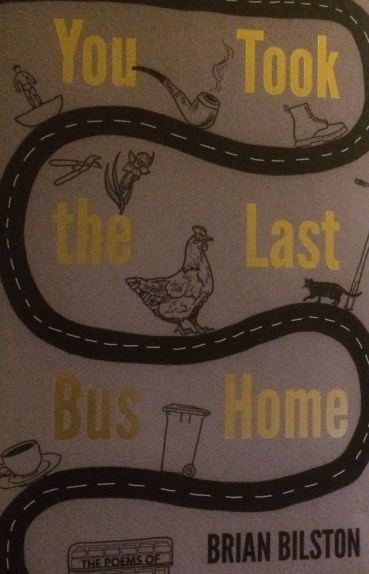
POETRY REVIEW: You Took the Last Bus Home – by Brian Bilston

Standard

2017-03-03-23-57-07

I’m not one to compare writers. I hate that. Yuk. Sure, it’s great for marketing, I suppose – if you must market. “Fans of such-and-such will love this novel by so-and-so…” YAWWWN. That sort of crap is lazy and unclever, and has never once given me that I JUST GOTTA HAVE IT vibe.

It’s somewhat pissing on the author’s skills, too: when the blurbage tells me that Writey McScribe is the next Clive Barker, all I hear is “this guy is wholly unoriginal, having re-hashed some dying old trope or other.” Talk about damning by faintstuff.

What I will do, though, is tell you who my own particular boat-floaters are, just so you know where I’m at; this *chick is notoriously hard to impress, particularly when it comes to those who poe. If you’re gonna rhyme your way straight to my heart, buddy, your wordplay is going to have to contend with the likes of Thackray and Lehrer, and you need to be eatin’ Shakespeare and Gilbert for breakfast – and you have to be able to think all four of ‘em under the table.

*Old bird.

Disclaimer: If you believe that poetry is simply defined as ANY OL’ PROSE WITH ARBITRARY LINE BREAKS arbitrarily shoved in ARBITRARY PLACES, then:

I

will

not

be

read

ing

your

stuff.

If you don’t put your very self into your art, please refrain from bothering my eyeballs. I ain’t interested in reading writing; I want – NEED – to read WRITERS.

So, what DOES make a poet? Or, rather, what makes my kinda poet?

It’s simple. It’s not about what the words mean to the reader – but what they mean to the person doing the poeing. Can they twist and bend words like Twisty McBenderson at his finest? Do they leave you salivating, dangling that end rhyme in the air, postponing it until you can cope no more, before landing it safely on the runway? A true (to himself and the reader) poet relishes how words feel, smell, and sound, how they taste in your mouth as you speak ‘em, and he knows exactly how to make ‘em DANCE.

I can count on one finger those I hold sacred amongst my contemporaries. Ladies and gents (and every gender in between), I give you Brian Bilston. This dude knows how to word.

THE LAST BUS HOME is Bilston’s debut … oh, bollocks to all that. I’m not going to tell you the stuff you can read anywhere else. That’s just padding. If you want to know when and where it was published, and by whom, then check the BUY IT NOW OR FOREVER HOLD THY WORDS link here:

https://www.amazon.co.uk/Brian-Bilston/e/B01I8GPLFG/ref=dp_byline_cont_pop_book_1

This is the sort of book you should forget to feed your cat for. This is the sort of book for which you should drop everything, RIGHT NOW, and just reaaaaad. (Speaking of dropping, do not even THINK of taking said volume into the bath with you. I speak from soggy experience. Actually, strike that. DO bathe with it, because then you shall have to take purchase of a second copy.)

Unputdownable is a term that should be reserved wholly and exclusively for the work of BB; his very mind is on them thar poetic pages, I tellzya. From simple silliness to moments of sheer genius, there’s something for everyone. And if you have a brain of the more literary persuasion, then this stuff is nothing short of grey-matter-fodder.

To say there is wordplay in store for you is the underest statement since Tiny Isaac, my local skint midget, said he was coming up short. Who else would do poetry by mathlight to make words be all Fibonacci sequency? Who else could offer lip-reading lightbulb moments of broken hearts and fixed words? Who _ls_ would omit a l_tt_r from an _ntire po_m to mak_ a point?

I have many favourites. But Read My Lips is the one – THE ONE – that seeps right into the very core of me (I won’t spoil the ending for you):

“To be clear, I’m not talking

Fifty Shades of Grey here,

but someone who knows their way around

the complete works of Shakespeare.


“I would rip out my heart

and write her name upon it

if she might recite to me

his eighteenth sonnet.”

THIS – right here – is how he rips my wordy l’il heart out. I was using that, damn you, Bilston.

So yes – buy this book. NOW. Eat this poetry. Salivate, devour, and relish it, and savour every last drop of Brianness as you decide whether to envy or idolise the man. Me?  I’ll be right here, waiting for the next bus.

Linda Angel
CLICK

Standard

img-saving-lives-under-fire

A pawn in an incomplete game of static insanity
Your blood-letting, tongue-tied grimace has you blind
While humanity’s serpents serp and singers sing
Of all the reaping things.
Madness’ descent pauses on this: it had no reason to exist
Until now, when it persists.
After spending too long in the half-life, you reach out and Geiger-count your blessings
Tick-by-tick-by-tick-by-tick

Click
By
Click.

So you reach the total sum of zero
A clickless life, a tickless existence
Bricked up in the wall of political persistence
There’s to be no saving of your soul – it’s only morose code for you
This is a remorseless dry, brown experiment
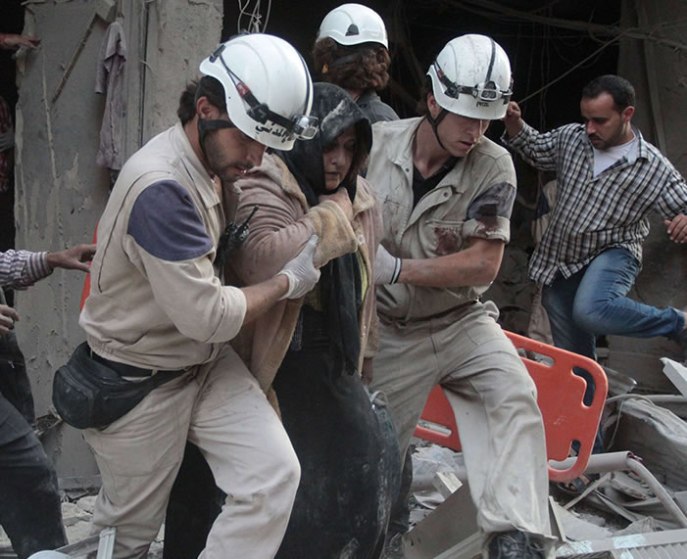
White helmet knights would save you from the rubble
But trouble is, they’re under it too.

Missing

Standard

Take me back in time a year,
before we lost our stars
The place was very different and
We still had Alan Rickman
And gods they fell to earth, perhaps from Mars.

Let me be back there again, when Richard Adams wrote
A planet with Dave Brubek meant
we still had time-out music
And Charon still had spaces on his boat.

Would that I could travel there, back to the past so rich
When Wilder’s Genes lit up the screen
And Garry Marshall was still here
And Ali fought his fight out of the ring.

We would share the air with them; their artistry we’d keep
Then Harper Lee’d write number three
There’d be two more in ELP;
Guitars would sing – they wouldn’t need to weep.

On Christmas Day George turned a different corner at the end
Choose Life he said, but died in bed
So musically thoroughbred
A loss so hard for us to comprehend

Postcards were sent from the edge
A life so unrestrained
A daughter died, a mother cried
And due to all the pain inside
She left to join her girl, to sing in rain.

I wish that I could write us there
Let Cohen’s days return
Erasing all the loss this year
So Doves won’t cry their purple tears
But me, I am no Caroline Aherne. image

Santa, Maybe.

Standard

I’d really love that Santa Claus
To do my shopping and my chores
Perhaps he’d even make a brew
And fill the car with petrol, too
Or maybe he could bake the pies
To keep me fat with sweet supplies
And while he’s at it he could bring
An end to human suffering
Perhaps he’ll stop the greed and hate
And start the love, for goodness’ sake
But something small would do for now:
My quiet hopes are just as loud
So now I have a single wish
I’ll whisper it, and it is this:
Oh, please bring homeless folk indoors
I’d really love that, Santa Claus.

image

Where the Heart Is

Standard

So what will all those children do?
~Don’t worry child, they’re not like you.

And what will Syrian children wear?
~Forget it, son, they’re over there.

But what will those poor children say?
~You cannot hear, they’re miles away.

It’s Christmas soon, what will they get?
~I’ve told you, kid, you must forget.

But why, and how, what can I do?
~You can’t, it isn’t up to you.

But maybe I can teach my friends
~Oh here we go, you’re off again…

Perhaps I should just start with you
~What do you mean? What did I do?

You turned away, you shut it out
~But we can’t help – we don’t know how.

And you gave up without a fuss
~But son, we need to care for US.

Oh, Father, won’t you ever learn?
~It isn’t us – it’s not our turn.

It is! They’re us – and we are they
~You don’t know half the things you say.

I know I’ll never learn from you
The things you let this planet do
You make it hard to love and trust
With all the lies you spin to us
You say we’re different, us and them
But what if it occurred again?
If we don’t help them, save them soon
Humanity will go to ruin
We need to stand up, take them in
As refugees washed clean of sin
For if we don’t, then when it’s us
Then who’ll be here to make a fuss?
If we don’t help the folk oppressed
What happens if it’s our turn next?

~Just calm yourself, child, take a pew. This will not happen, not to you. We’re fine right here, in Blighty’s arms; our King and country won’t be harmed. Now settle down and go to bed, and sleep away what’s in your head.

What’s in my head is in my heart
And when I wake, I’ll make a start.

~Not everything is black and white, you can’t win every single fight. I’m sure you see in monochrome.

Tomorrow, Dad, I’m leaving home.

The Fallen

Standard

They took, as they tend to take.
Staking another, blood flutters another monster killed by guilty remorse
doors closing all the time opening
Hoping hearts beat as nothing and static arrives
Rhymes for our times and beds for our sorrow
Tomorrow, as they say, is another day
Way back in the future, way back when
Then all will be revealed
Concealed in masquerade
Lemonade for sale
Ale for the drunken
Thunken thoughts escaped
Placed upon life and the rest
The best is to come
Dumb it down for the truth
Rooftop-shouting
Louting and looting
Rooting and thrilling
Spilling on pages
Wages forgotten and spent
Bent out of shape for today
Shaving skin is permitted
Knitted scarves are made of veins
Games aren’t enough
Rough or smooth
Through it all:
The fallen, they fall.

Sonnet 2,152 or; The Verse that Wrote Itself

Standard

The verse that wrote itself spilled from my pen;
No conscious thoughts of mine gave any hints;
I did not know the muse was there but then
A sudden flow of ink came; unstopped since.
The poetry that followed would reveal
All secrets which were hitherto unspoke;
For reason could no longer be concealed
In rhyme, for meter’s beats not jest nor joke.
The prose that now be published be all me;
No edits nor critique has it been through
The muse has spoken clear and wild and free;
And through this art I offer words to you.

For this new love, a poet did I choose;
And therein found my soul, my heart, my muse.

It’s Great

Standard

image

It’s great that the battle is over
And there hasn’t been fighting at all
There’ve been no guns or bombs
Since the days of The Somme
When we learned our first lesson through war

It’s great that there’s nothing but peace now
And everyone just gets along
There’s been no shed of blood
Because everything’s good
As it’s been since the days of The Somme

It’s great that nobody is dying
And everyone’s treated the same
Since the days of The Somme
We have really moved on
Since our soldiers were pawns in a game

It’s great that we sit and remember
The red fields in a place called The Somme
We will have tea and cake
Reminisce of the waste
Of our men who died over the top

It’s great that we keep still in silence
And be thankful we weren’t at The Somme
For two minutes we’ll hush
And remember the pushed
After that we will just Carry On

It’s great that the world is now different
And it never will happen again
And the things that we know
Mean we’ll Sing As We Go
Since The Somme, since the war, since back then.

It’s great that it’s all in our history
And the slaughter is back in the past
Since the death at The Somme
All the horror has gone
So what’s wrong? Take a pew and relax.

It’s great that our royals lay wreaths there
And the PM will always pull through
So relax, have some wine
And just wait for the time
That they bring a new Somme straight to you.

OUR DENISE

Standard
© Desmond O’Neill Features:-www.donfeatures.com  photos@donfeatures.com

CAROLINE AHERNE, 1963 – 2016

INT – LIVING ROOM – DAY

We’re in a Northern living room with DENISE, NORMA, JIM, AND DAVE – four members of a much larger family. Nothing’s doing, save three quarters of ’em sittin’ off, watching the box. We see Norma (90s) asleep at one end of the sofa. She twitches and shifts, opens her eyes briefly, and nods off again.


DENISE

Worra we watchin’?

JIM

Gogglebox.

DENISE

What’s it about?

JIM

‘Sabout the telly, Denise.

DENISE

What’dya mean?

JIM

About people who watch the telly. What they’re watchin, what they make of it and stuff.

DENISE

Ohhh.

DAVE (to Denise)

Worra we watchin’?

DENISE

Gogglebox.

DAVE

What’s it about?

DENISE

People who watch the telly.

DAVE

Ohhh. Right.

Enter ANTHONY, (30s), wrapped in a coat.

DENISE

Ey, Anthony, stick us a brew on, would ya?

ANTHONY

Bloody ‘ell! I’ve just got in – what’d yer last slave die of?

DENISE

Aw, go on, Antnee. I’m watchin’ the telly.

ANTHONY retreats to the:

INT – KITCHEN – DAY

We move with ANTHONY to the sink, where we see his Mum, BARBARA, washing the dishes. Anthony grabs the kettle and heads towards the tap.

ANTHONY

Budge up, Mum.

BARBARA moves out of the way to allow ANTHONY to fill the kettle. From the living room, we hear:

JIM

‘Urry up, Antnee. That tea won’t make itself.

ANTHONY

(shouting back to the living room)

Alright – keep yer ‘air on.

We move back to the living room, where we see Denise, Dave, and Jim with their eyes glued to the box as we hear the CLANKING of mugs and spoons in the kitchen, out of our view. Anthony enters from the kitchen, carrying four mugs of tea – two in each hand.

ANTHONY

Worra we watchin’?

DAVE

Gogglebox.

ANTHONY.

What’s it about?

DAVE

The telly.

ANTHONY

Ohhh.

BARBARA enters from the kitchen.

BARBARA

Where’s our Denise?

JIM

She’s gone, Barb.

BARB

Gone where, Jim?

JIM

Dunno, Barb. I just looked up and she’d gone.

(beat)

Dave, d’you know where she’s gone?

DAVE

I don’t, Jim, no.

JIM

Worra ’bout you, Antnee? D’ya see her leave?

ANTHONY

No, Dad, I never. An’ her tea’s ‘ere, goin’ cold.

We pan around the room and see a Denise-shaped void where she should be sitting. NORMA wakes up, and looks around.

NORMA

Where’s our Denise?

We see DAVE shrug as we hear Barbara:

BARBARA

Dunno, Mam. She just left.

NORMA

Ohhh.

As we focus on the sofa’s void, we hear the theme tune of the BBC news headlines, followed by: IT’S FIVE O’CLOCK, GOOD EVENING – HERE IS THE NEWS.

NORMA

Worra we watchin’?

JIM

The news, ya daft bat.

NORMA

What’s it about?

(Beat)

There’s a deafening silence as we go from face to face, taking in their expressions as we hear:

BARBARA

It’s…about…our…Denise.

With their eyes – the eyes of The Royle Family, we move to the TV, where we see a still image of a blonde, beautiful CAROLINE AHERNE (52), and the HEADING in text at the bottom of the screen: CAROLINE AHERNE, 1963-2016. We pan over to a completely empty sofa; an empty, silent living room –  and fade to black.

END SCENE