Micro-Thoughts on “Old Molly Metcalfe”

Standard

Jake Thackray—what is a songwriter if not a poet?—is one of the finest wordsmiths ever to grace both page and stage; and, indeed, one of the finest horror writers, though he might not be commonly acknowledged as such. With an unbridled passion for words (and all the hoops through which he could get them to jump), Jake would weave entire worlds from the threads of language, producing the silken, impenetrable fabric of verse. Via the odd—in every sense—little ditty, assisted in no small part by the relentlessness of the slant rhymes that one imagines came to him as naturally as breathing, he could convey an atmosphere of dread, of doom, of death, all of which are rife in Old Molly Metcalfe, published in Jake’s Progress, Star Publishing, 1977.

When performing the piece, Thackray would introduce the tale thus: “In Swaledale, North Riding of Yorkshire, sheep farmers used to—and some of them still do—count their sheep in a curious fashion: Yan, tan, tether-mether-pip…” and explains that Molly Metcalfe was a shepherdess on a moor, sent to mind sheep at the age of eight. “She was found rotting with her ghastly sheep at about the age of twenty-eight. This is a song for her.”

The repetition of “Yan, tan, tether…” (is the girl really counting sheep, or is she counting down to her own demise?) conveys methodically the cold, cold atmosphere of both the Yorkshire moors and the dreary situation. But for me, it’s the beautiful, delicious assonance that hammers home the horror of the tale, particularly “…steep and bleak,” and “In her back in the bracken…” These two fleeting phrases top-and-tail the narrative, summarising the history of Molly’s short life rather nicely. Or, to be more accurate, rather horrifically.

Seeing Red – by CM Franklyn

Standard

You, Myself, and I

Standard

Today, my little grammar muffins (whatever they are), we shall be looking at Me vs I, and when to do the Re-flex-flex-flex-flex. Sort of.

BON

I had this exact ‘do at this exact time. Just so you know.

So, which is it —and me, or —and I?

In accordance with fings-they-lerned-me-at-school and that one electrocution elocution lesson I attended back in the summer of 1986 (the idea of which, if you know me AT ALL, is fucking hilarious), you and I sounds posh. It just does. And if you choose it over you and me, no matter the context, it gives the impression that you have a bit of dosh to throw about. THAT’S WHAT THEY TOLD ME.

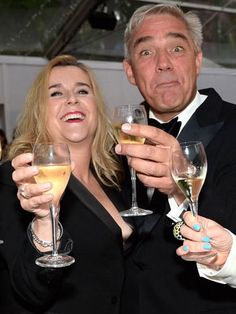
They were wrong. To prove my point, here’s a pair of toffs off the telly, who’ve *volunteered to help us out with a little exercise. I’m paying them in booze.

*Pic stolen wholesale from Google.

c4d7b747a4e35e22968a9c0e4056df0a

A pair of toffs off the telly.

Now, Mr. Toff might be inclined to caption the pic thus: “My wife and I.” (They’re pictured here at Balmoral’s annual squirrel-tickling festival, I’m told.) But he’d be wrong. It’s “My wife and me.” Why? Well, you wouldn’t say, “Here’s a photo of I,” would you?

I mean, just listen to how SILLY this is: “Here’s I at the Mountbattens’ monthly frog-rogering contest.” See?

So yeah  —it’s “Fuckface and me.”

It is, of course, fine to use I in the grammatically correct manner:

“Edgar and I are planning a spiffing party. Would you like to join us?”

Or:

“My husband and I shall be going dogging in New Brighton this evening, if you’re out and about.”

If you bump Edgar off, and do away with the husband, you’re left with: “I am having a dinner party and then I shall be going dogging.” See? Perfect sense.

Disclaimer: the above example is in no way autobiographical. Ahem.

Them wot write songs have a lot to answer for, too; Geri Halliwell’s dreadful “Lift me Up” springs to mind:

Watch the first light kiss the New World
It’s a wonder, baby like you and I
All the colours of the rainbow
Going somewhere, baby like you and I

AAAARRRRRGH! *Shouts “You and ME” at the car radio twenty years ago.*

How to remember the thing about the thing: cover up the “you and” bit. If the sentence still makes sense, you’re good. Using the same vintage spice example as above: “It’s a wonder, baby, like I” sounds shite, whereas “It’s a wonder, baby, like me” still sounds shite. But at least it’s correct.

More food for thinky thoughtstuff: is the title Withnail and I correct? Well, it depends what’s implicit, and what floats your own paticular proverbial. If it’s “Here’s a bunch of shit that Withnail and I got up to…” then it makes complete sense. But if it’s “The story of Withnail and I,” then it’s incorrect, and should be “Withnail and Me.” You could argue a case for either, really, if you had enough time and/or the inclination. Which I don’t. But here’s some braingrub anywho:

Withnail and I went on holiday by mistake.

or:

Withnail and me went on holiday by mistake.
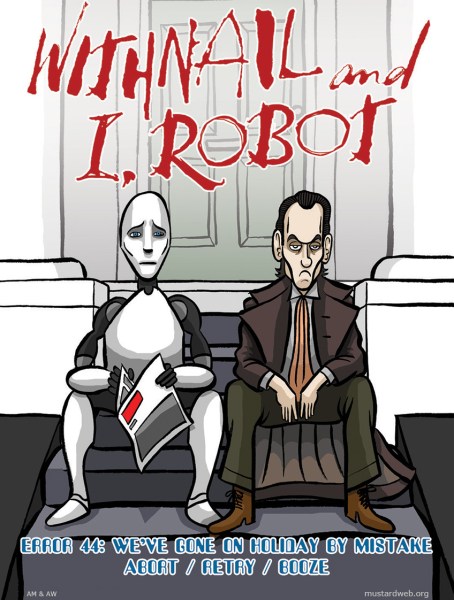
withnail-and-i-robot

Yeah. It’s I. DO NOT MESS WITH THE ‘NAIL.

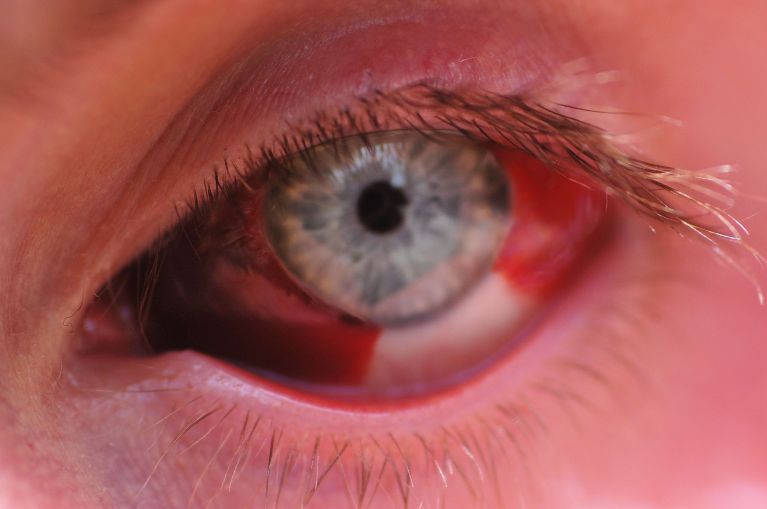
Speaking of dinner parties, someone once asked me, by text, “would you like to come to Steve and I’s on Saturday?” I couldn’t answer, what with the BLEEDING EYES ’n’ all. True story.

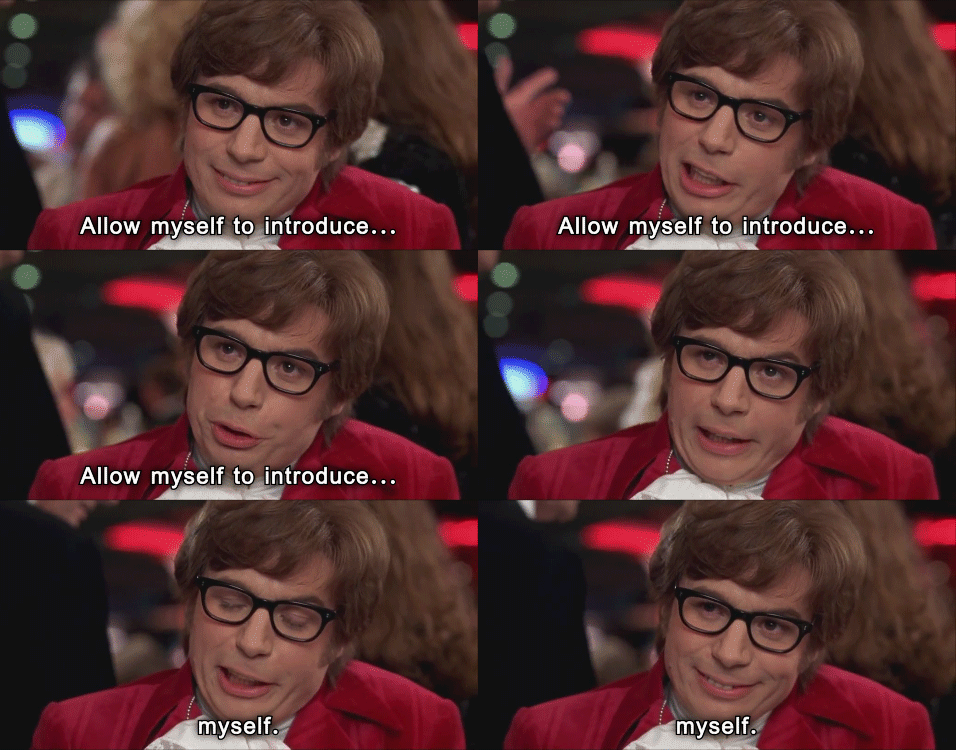
Now, allow me to introduce … myself.

source.gif

Myself/yourself/himself/herself/themselves … yadda yadda … are all reflexive pronouns; i.e. a pronoun [me/you/him/her/them] that reflects right back at … itself. Like a reflection, really. But not really.

If you’re looking for a swanky explanation, WIKI says: “In general linguistics, a reflexive pronoun, sometimes simply called a reflexive, is an anaphoric pronoun that must be coreferential with another nominal (its antecedent) within the same clause.” Ain’t nobody got time for that (at this point, you might want to refer to the ‘double negatives’ blog I haven’t written yet).

“I don’t like myself” or “I’m going to reward myself for finally finishing that 120,000 word novel after seventeen years” are fine.

Using “Gordon Ramsey and myself are going to cook you a meal” is bollocks. Gordon wouldn’t allow anyone else in his kitchen. Unless, of course, they were conveniently placed just so he could swear at them. But why ELSE is it bollocks?

Well, you wouldn’t say “Myself are going to cook you a meal”, would you? You’d say “I am…” Same as before, folks —same as before. Cover up the first bit and see if it still makes sense.

Office-speak has a lot to answer for *sigh* …

Alright, alright —I’ll wrap it up. Off y’go. Be sure to tune in to the next instalment: *THE GAPING MAW OF A PLETHORA OF A MYRIAD OF CREATIVE WRITING CLASSES. WITH TENTACLES.

*I might come up with a better title before then.
It’s *You’re Call —Fixing the Fundamental

Standard

*Your.

(Made ya look.)

Do you have to be gud wiv werds to be a decent writer? Nah —but it certainly helps. If you want to cut down on those rejections, for instance, it’s not a bad thing to up your technical accuracy game. If you wish to master your craft or hone your skills, then you might want to start with the basics.

Here are some of the most common mistakes writers make —and some easy ways to remember the correct usage. I’ll stick with cat/dog/coffee/pizza analogies, because writers (be warned: this might get a little gross and/or sweary, because me).

ITS vs IT’S 

ITS is possessive; that is, we are referring to something belonging to it. So, if we’re talking about a cat who has a propensity for displaying all things posterior, then we might say it had its ‘… tail in the air, flaunting its sticky brown bumhole.’

Just as that which belongs to her is hers, and something belonging to him is his, then that which belongs to it must be its.

IT’S is a contraction of IT and HAS, or IT and IS. A contraction is the abbreviation (shortening) of a phrase or word group, using apostrophes to denote the omission of a letter (or letters). One merely shoves the apostrophe in the space the omitted bit would occupy.

Common contractions include: 

  • Don’t = DO NOT (Don’t tell me how to write.)
  • Haven’t = HAVE NOT (I haven’t written anything today because I’ve been dicking around on Facebook for twelve hours.)
  • Shouldn’t = SHOULD NOT (You shouldn’t put pineapple on pizza. Like EVAH.)
  • She’s = SHE IS (She’s banging on about fucking grammar again, the pedantic bint.)

And the one we’re talking about here: it’s (it has/it is).

Example:  ‘It’s too late…’ (i.e. ‘I was just about to scoff a bunch of soggy, overboiled ramen but it’s too late because the cat’s been sick in the bowl, so I guess I’ll have pizza instead. But with no pineapple. Because ew.’)

PLURALS vs POSSESSIVES

Speaking of apostrophes —those little shits get everywhere. And I mean everywhere. Have a gander:

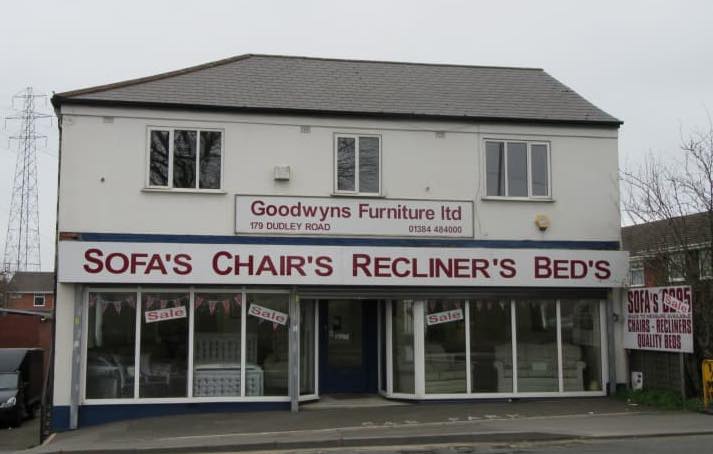
shop

Sofa’s. The sofa is what? Comfortable? Maybe something belongs to the bed, which is owned by the recliner, which is the property of the chair … AAAARGH!

Assuming the store has more than one sofa/chair/recliner/bed for sale, they should have used plurals here, which, in this case, is as simple as adding ‘s’ to the end of each item.

As for Goodwyns Furniture; assuming Goodwyn is one person, Goodwyn’s Furniture would be correct. I dunno —perhaps signwriters are easily confused these days. Humph.

Here are some photos of a rather splendid bookstore chain. I guess only half of these shops belong to Mr W.

72977264_1163678273829098_7566958388085522432_n

CONSISTENCY IS EVERYTHING, PEOPLE.

Are you still with me? No? Okay —back to animals, then:

  • The dog’s knackers —a pair of soft, dangly objects between a dog’s legs.
  • The dogs’ knackers —the danglies of more than one canine.
  • The dog’s knackered —the dog is exhausted, probably having tried and failed to catch the cat that spewed in the noodles earlier today.

Recap

Something belonging to one thing: the thing’s thing.

Something belonging to more than one thing: the things’ thing.

It’s easier to nail if you sort out the plural first and then determine the correct possessive:

Cat —>cats —> I wuv cats’ wikkle toebeans (aww).

YOU’RE YOUR OWN WORST ENEMY

You’re writing a nice little story, but you’re just not sure about your grammar. Here’s a quick once-over:

You’re —a contraction of you and are.

Your —something belonging to you (which makes it yours).

So:

Your coffee’s gone cold. You’re just too wrapped up in your novel to remember to drink it (you badass wordsmith, you).

On that note, here endeth the first lesson. Up next: You and Me, Lose and Loose, and Why Eyebrows are Ripe for the Pluckin’.