Micro-Thoughts on “Old Molly Metcalfe”

Standard

Jake Thackray—what is a songwriter if not a poet?—is one of the finest wordsmiths ever to grace both page and stage; and, indeed, one of the finest horror writers, though he might not be commonly acknowledged as such. With an unbridled passion for words (and all the hoops through which he could get them to jump), Jake would weave entire worlds from the threads of language, producing the silken, impenetrable fabric of verse. Via the odd—in every sense—little ditty, assisted in no small part by the relentlessness of the slant rhymes that one imagines came to him as naturally as breathing, he could convey an atmosphere of dread, of doom, of death, all of which are rife in Old Molly Metcalfe, published in Jake’s Progress, Star Publishing, 1977.

When performing the piece, Thackray would introduce the tale thus: “In Swaledale, North Riding of Yorkshire, sheep farmers used to—and some of them still do—count their sheep in a curious fashion: Yan, tan, tether-mether-pip…” and explains that Molly Metcalfe was a shepherdess on a moor, sent to mind sheep at the age of eight. “She was found rotting with her ghastly sheep at about the age of twenty-eight. This is a song for her.”

The repetition of “Yan, tan, tether…” (is the girl really counting sheep, or is she counting down to her own demise?) conveys methodically the cold, cold atmosphere of both the Yorkshire moors and the dreary situation. But for me, it’s the beautiful, delicious assonance that hammers home the horror of the tale, particularly “…steep and bleak,” and “In her back in the bracken…” These two fleeting phrases top-and-tail the narrative, summarising the history of Molly’s short life rather nicely. Or, to be more accurate, rather horrifically.
My Verse

Standard

It seemed as though my verse had gone;

I hadn’t rhymed in far too long

He took my words and killed them, see;

And then, there was no poetry.

No stanzas came, no stories nor;

All victim to my saboteur

My words no longer coursed through blood;

For what is poetry, sans love?

Of pen and ink: my paper broke;

Of diction: nary a word was spoke.

CM

POSH

Standard

Universes ago, no ticking constraints existed:
Time, an invented partner for space
Appeasing and squeezing, tock-by-tock
Manufactured gods, divine excuses for humanunkind
One landmass, on one secular orb
Anyone could see it was Good.

The requirement of Openness took thought:
Taking flight, sprouting wings, thinkstuff soared.
Into existence came something from nothing
Sixes and sevens eighted themselves infinitely;
Entire paths crossed on that loop
Somewhen eternal, near nothingness became allstuff.

Godlessness became the new old way
We infected plagues with zesty pestilence
Accidents were rewound and hate unhappened
Death went, unless by nature’s kindness
Old, optional, terminated, cheap and free
This would be our infinity, squared.

Rank planets oozed, blood splats seeped.
Old mould decayed in a day
New muses chose prose for
immortality
Perception’s edge shielded and shelved plans
Nothing doing, no carrots, no waiting
Veni, Vidi, Vici, in Saecula Saeculorum.

Third person passive past words went
You don’t like second, too tense
Literary narratives and linear timelines spent
Bulksome, lengthy word counts redundantly done
All I have now is me:
My own primary, secondary, tertiary person.

Nearing endness, I float to escape
With Eternal words booked, I board
In my everwhere, there’s no nothingness
Stars and univi belong to me
Staccato sensations from beautifully musical storybooks
Now this: Pain Over, Starlight – Home.

09CD7025-F122-49EC-A132-CB9357E638C4

Wilfred’s Men

Standard

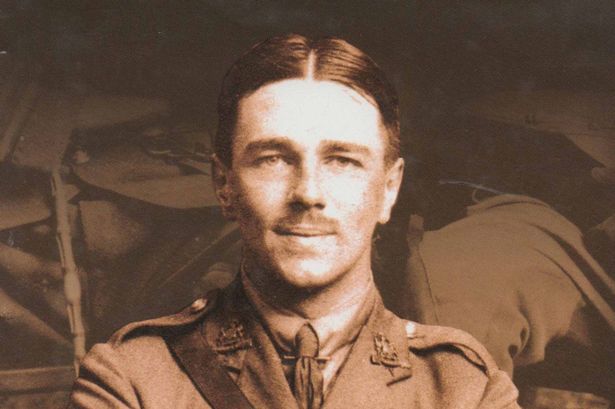
A poet’s shattered soul reacts to crumpled men with words intact

Recalling lies as glory folds, one verse – yet many stories told:

Our Wilfred said they’d cursed through sludge, towards their distant rest they’d trudged

And Wilfred’s men had lost their boots but limped on, blind, deaf to the hoots

There, Wilfred saw a hanging face – as death came to his writing-place

So we could read -at every jolt- of gargled blood to our revolt

If Wilfred knew – if he could see -dead men survived by poetry

What would he say – and would he be surprised his words revered by me?

Adored by age, revered by youth, for hitherto-unspoken truth.

If then were now – if he were here, would Wilfred to the world endear?

Or is it likelier he’d see: the sale of arms, cash weaponry?

And then the fight to stop it all, this great divide as countries fall?

Perhaps for now, hypocrisy – humanity’s mobocracy:

And as he rhymes of this or that, he’d write: Manus Manum Lavat.

w