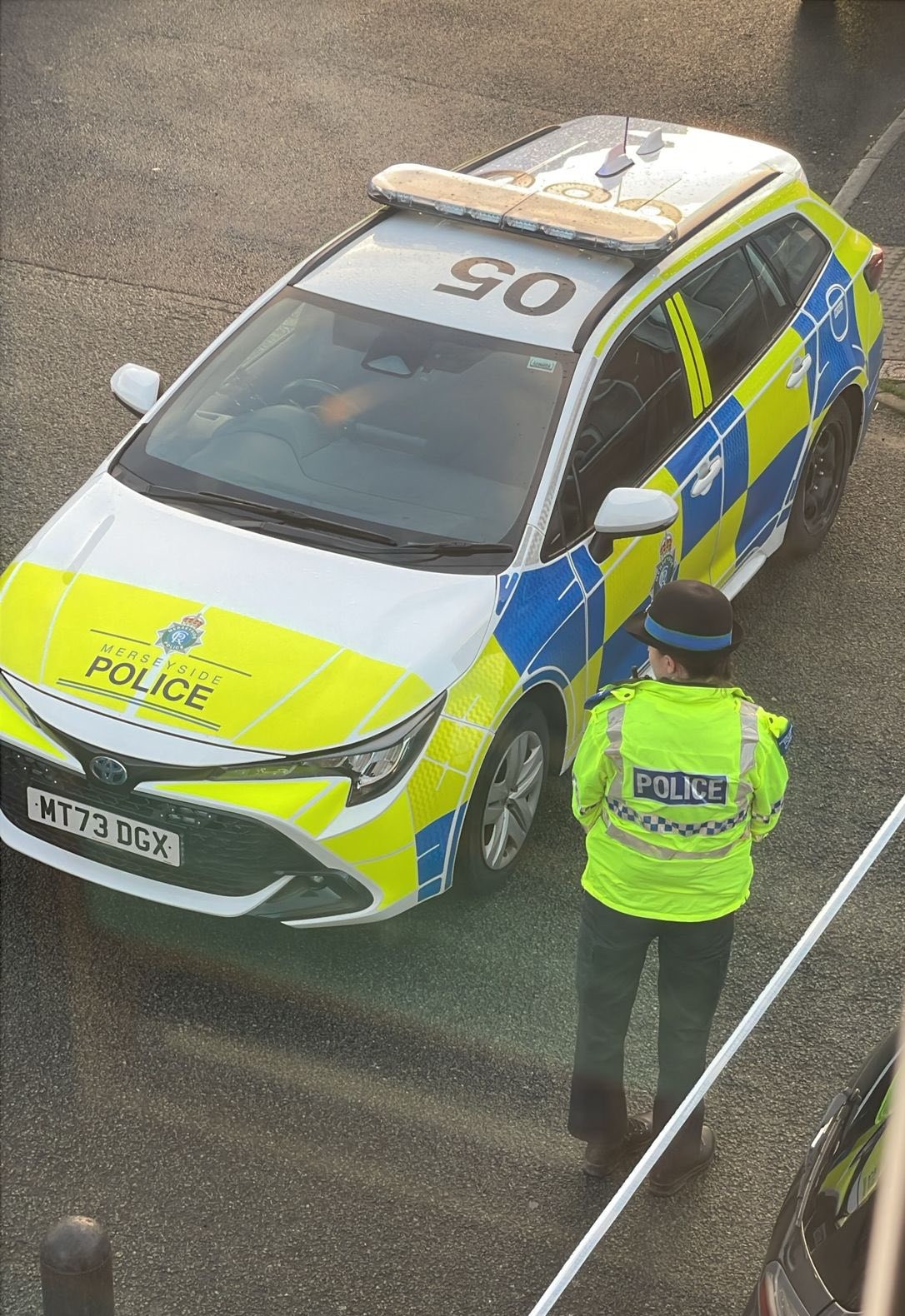
There’s an unexploded device. It’s by our house. Right outside, apparently, according to the police presence. They’ve cordoned off the entire block—just after 3pm, I had to leg* it to intercept my kid on his way back from school, what with his usual route being taped off.
*Hobble pitifully
It’s gotta be a wartime jobbie. Two or three houses a couple of doors down were razed to the ground in the Blitz, after all. Maybe the neighbours have dug up a littlerelic. Of course, that’s merely speculation, and isn’t that always rife by default?
In keeping with said rifeness, gossip swirled around pretty swiftly: “Someone’s left a bomb on the police station doorstep.” (As y’do.)
The truth is somewhere in between. The story (so far) goes that some bright spark had taken a bomb to the copshop, and it turned out to be unexploded ordnance from the multi-billion-dollar sequel to the First World War—the second local explodey in as many weeks, what with the sitch at Bidston tip last Monday. (We also had one in Hoylake in December gone, and at least one in Birkenhead in ’24, so maybe we’re going for some kinda record over here.)
(Note: If you do so happen to uncover any sort of weapon—be it a shooting device, a stabber, or an otherwise suspicious-looking gadget—be sure to call 999 immediately. Don’t be carrying bombs around, kids.)
How does it make me feel, though, being told to stay indoors, awaiting further instruction? How does it feel having to keep the kids away from the windows, holed up in the kitchen?
Lucky. I feel lucky.
This is Good ol’ Blighty, where (most) explosive matters are typically sorted within a matter of hours. This isn’t Palestine. It’s neither Ukraine nor Venezuela. And before I’ve even finished writing this li’l piece, the cops have vacated, with nary a word. I think we’re supposed to assume it’s safe, now.
And for us, it is. Halfway across the globe, though, there’s a heckuva lot of folk safety eludes. People who never get to assume, wondering instead whether their kids will survive another day, whether it’s safe to go outside at any given moment. This whole fuckinpocalypse is a sleeper; a creeper. It’s not about me, sitting in relative safety in a Victorian semi. It’s about you. All of you.
So why the blog? Simps: the journalist in me has to write about it. If she doesn’t, she ain’t breathing. Which is more than can be said for countless Palestinians, Ukrainians, and Venezuelans.
I’m not a fan of sharing personal stuff, really. But when it comes to health matters, I’m all for it. Might help someone, after all. So, because health matters, I’m happy to share. Triggers: every expense spared. No punches pulled.
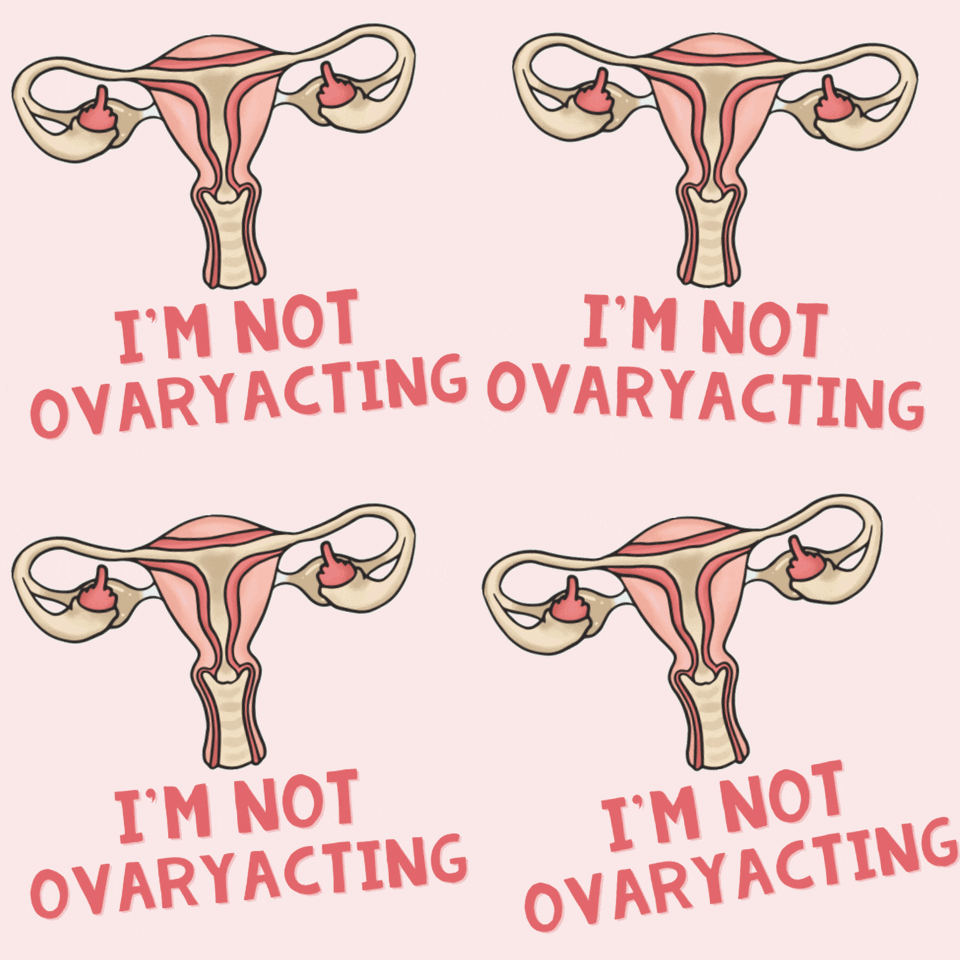
Around a decade ago, I had endometrial ablation surgery – essentially, where the womb lining was burned away to prevent the excruciating periods that were taking over my life —we’re talking two bleeds a month, and pain as bad as labour (the crotchgoblin kind, not the political party, just so we’re clear). And it worked! After an initial, post-surgery bloodrush, I had no periods for ten years…
…until a few weeks ago. Oh, joy.
A sudden onslaught of goo and agony, and I ended up taking myself off to the GP. “You need an urgent ultrasound,” she said, “within nine days.” And what with the NHS being brilliant ’n’ all, they sorted it within two. Cool, huh? Well, not so much. The ablation had caused the front and back walls of the uterus to fuse together, so they were unable to see into the damn thing with either the ultrasound wotsit or an up-the-vazoolah camera (and that thing frickin’ KILLED, I can tell ya, pressing on the ol’ cervix as it did). Soooo… surgical intervention was needed.
“Nothing to worry about, we’ll book you in for a hysteroscopy. We just need to open the womb up and take a look inside. We’ll take a biopsy while we’re there—just a little slice—and if there are any fibroids or polyps, we’ll remove them there and then. See if we can find out why you’re bleeding peri-menopause and post ablation. Want a general anaesthetic?”
“God, no. Can ya just send me away with the fairies?”
“Sure. We’ll take you as kite-high as legally permissible.” (Not strictly verbatim.)
Cut to: me, a couple of weeks later, having sorted the time off from work with my very understanding boss (seriously – so lucky to have a line manager who GETS it, yanno?), and it’s the day before the surgery. Muggins ’ere chooses that moment to read the pre-op guidance. For some women, this procedure can be extremely painful under local anaesthetic, in which case it is likely we would schedule further surgery under general anaesthetic.
WELP. That’s me screwed, then. *Recalls the last time she had surgery under Lidocaine (or whatever it was) and having to be prised off the ceiling with a frickin’ spatula*
So, I opted for the general-knock-out-job after all. This OBVS meant I had to write my Last Will and Testament, coz it’s just how I roll, ’kay? Left a note for Rob, going into great (for ‘great,’ read ‘bizarre’) detail about settling my affairs. Emailed it over, advising him to open it only in the event of snuffage. Named it DEATH RANT. Started it with something like ‘If you are reading this, I have shuffled offa this mortal coil and am trying to look after you all from Beyond the Grave (Booo… **cute ghost noises**)”
Followed this up with: “I DO NAHT want a funeral. No grave, no nuffin’. Direct cremation, cheap as possible.” Included such gems as “Punch a nazi. Punch two. Keep the faith – the good guys win in the end, and love will prevail, as it did for us. But do find love again. You deserve it. I promise not to perv on you from the Spooky Realm as you’re bumping uglies.”
I might—slightly, kinda, sorta— have been a little freaked out by the idea of leaving everyone behind. I’m an unapologetic what-iffer, it has to be said.
Anyway… I digress…ended up in Clatterbridge at 7:30am on the 30th of December. Spoke with the surgeon dude (and he was a dude—I have jeans older than him) who gave me the low-down of the show-down: “We’ll open ya up, and we’re hoping to kick you out the same day. What this procedure won’t do is tell you why you’ve been bleeding. It’s not a diagnostic. You’ll get your biopsy results within four weeks, and your GP will tell you the next steps.”
Okay, then.
“We’ll pump ya full of painkillers and anti-sickness goodies, this’ll all wear off after twenty-four hours, so tomorrow is gonna be the worst day, pain-wise. Keep yourself dosed up.”
Noted.
“Here’s some schmexy support stockings. Keep these on for three days. Take ’em off to shower. When you’re firing on all cylinders again, which we expect to be within three to four days, you can lose ’em. Sound good?”
And that was it. Paper knickers on.
Me: in and out of theatre, them: in and out of me. Biopsy: taken. Aftercare advice: “Monitor your bleeding. If you’re changing your pad more than once an hour—no tampons, only pads, this is important—get to the GP or down to out-of-hours. Let’s check your pad now.”
*Pulls drawers down* “Argh! What’s this brown gunk? Did I—”
“Ah, no, sweetie. You didn’t. It’s just iodine.”
Thank fuck for small mercies, as the saying doesn’t go.
So here’s me now, the day after, bleeding and in pain, dosed up on Co-codamol and Ibuprofen, which means I have to take other, counter-acty drugs, not least due to my beautiful IBS, which means I can’t even tolerate the Ibubastard without Omeprazole. And then there’s the husk I have to take to enable my gut to cope with the Co-codeytwat.
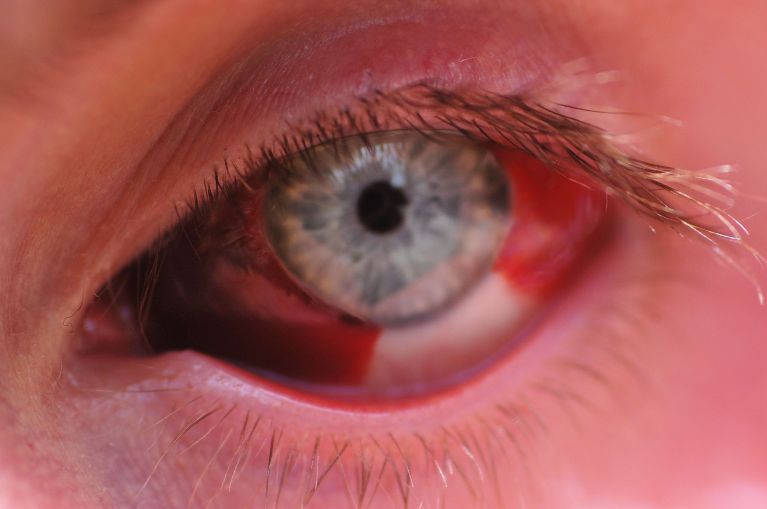
ANYWAY, they showed me the photos. Looked a bit like those eye-close-ups you get at the opticians. Kinda like little pics of planets. But with black spots. Said black spots might just be shadows from the camera, but we’ll find out for sure within the next four weeks.
Might need a hysterectomy, which is what they’d said, ten years ago, I might ultimately need. And I am kinda pinning all my hopes on it. I’ve had chronic problems with both intestine and uterus for thirty-plus years now, and I’m convinced the two are linked. Let’s get rid of that womb, I say. Give me more room in there, and less to contend with. My body does NOT do periods. I’m too old for that shit, I swear. At 51, and after three perfect kids, I’ve done my time, paid my dues. I was supposed to be all peri-menopausal ’n’ stuff, and instead, I’m currently back to painful fortnightly bleeds.
Let’s stop the bleedin’ before I go bleedin’ mad.
DAY TWO: The-day-after-the-day-after…
It’s New Year’s Day. Stayed up ’til midnight on NYE, coz of course I did. What’s weird, though, is that I slept through until about 6:30 – totally unheard of for me. (I usually wake on the hour, every hour, ancient bladders being what they are.) Maybe it’s because I’m still blessed with some of that delightful anaesthetic. NHS advice does state you can be sleepy for days, so that makes sense. But also: OW. The sore throat (from the intra-gobular breathing tube) is worse than it was yesterday, and everything else hurts, too.
Like the day after the day after a fall, or two days after a gruelling gym workout (not that I have any recent examples of that), today is proving rather sucky. Woke with horrid back pain and had to grab the TENS machine and a hot water bottle. Again, the bumph confirms that muscle stiffness and aching can last for several days, post-op. Apparently, it’s worse for folk with pre-existing back pain or conditions such as arthritis, so there’s another tick-in-a-box for me. Yay. And the period pains are back with afuckinvengeance. I’d all but forgotten how shite it felt to be sitting on the loo, just bleeding away, little micro-contractions threatening to take away your sanity.
I don’t know if it’s a good or a bad thing that ‘Your body can take up to a week to completely eliminate the medicines from your system’ — on the plus side, that might mean I’m having a little extra pain relief still coursing through my chassis, right? But on the ol’ flipperoo, what if I’m unable to work tomorrow?
NHS guidelines: avoid work for 48 hours after general anaesthetic, as your judgement may be impaired. Specifically: Do not sign legal documents or make important decisions. This is pretty much the bones and sinew of my day job, so there’s that. Cool.
The 48 hours is up, though. It’s a non-working day today, being New Year ‘n’ all, so I don’t have to worry about it for now. But what of tomorrow? Will I be fit and well, able to move about (I was using a stick yesterday, which I must admit was a great help), and fully compos mentis* when it comes to decision making? I have to worry about this, because ultimately, it’s something I could lose my job over. One sick day ‘too many’ and it’s oral warning time. Let’s face it, though: I’ve been here before. You don’t experience three decades of sickness without understanding how the Managing Attendance process works. And I’ve been all the way through it, culminating in dismissal in early 2016. Somehow, I’d proved myself worthy of a second chance by March 2025, and was doing pretty well… until I wasn’t. Until THE BLEED.
*As if. My brain hasn’t functioned properly since circa 1976. Nutso is the new normal.
Ho hum, right? All a gal can do is suck it up and get on with it, I guess. Maybe I’ll be okay tomorrow, or maybe I’ll need that extra day off. All I know is that today, I won’t be able to prepare the fabulous NYD feast I was planning, and will have to get the kids to muck in. Maybe we’ll have a toned-down table this year, sans trimmings. But one thing I can say for sure is that THERE WILL BE CAKE. Like me, it might even be filled with red goo.
DAY THREE – It Ain’t Ova Until the Fat LadySlims
Alright, alright, I’m no lady (quiet at the back, there). What I am, though, is an egg. I realised this today, 72 hours post-surgery, when I tried to remove the surgical sockeroos after a(nother) bad night’s sleep, and just could NAHT fold in t’middle. Seriously: ever tried to bend an egg?
Still woozy, still groggy, a little bit foggy, barely able to function, definitely unable to work. I did manage a bit of baking, though, because that’s simps, innit? I do that sort of stuff in me kip, like. Also managed a little bit of eating, too; while that won’t help with the bloating, it’ll certainly help soak up all the damned drugs. I’ve had enough of ’em now, and just want my brain back, thankyouplease.
The eggage should subside soon, I understand. Just as well, really, being that I can’t do me kecks up at the mo (and nobody back at the office wants to see that, I can assure ya. Nothing like a 14-year-old c-section Kanga-pouch to put ya off yer paperwork). Don’t get me wrong, I’m not sitting here moping or anything, or filled with toxic self-loathing (I proudly knocked that poisonous shit off back in 2018 and haven’t looked back), I’m just waxin’. Warts ‘n’ all, yada yada. It is, as they say, what it is. And, like I said, what it is, is an egg. A big, fat egg. Tell a lie: it’s more solid than fat. Imagine, if you will, a panel beater in the market for a wok-former. “Tell me,” he says, “wherever might I find the ideally rotund shape over which to beat this sheet of metal I conveniently have upon my person?”
You just point him in my direction. Tell him I said Hi.
My wonderful husband, of course, has—rather wonderfully—been wonderfully wonderful, and has been on hand for the lifting up of spirits and the lifting-of-the-Denby (the gorgeous-est but HEAVIEST tableware known to humankind) so I’ve had to lift nary a wee finger. Rob and I are carers as well as parentals, so we have other folk to look after when we’re not busy being poorly ourselves or bringing home the Quorn Bacon. With laughter and song, though (and a metric effton of pisstakery), we manage. No—we more than manage. We love. And with love, it’s really quite simple. We might not have much, but we have it all. Life is good. No eggsistential crises here.
(I might be feeling crummy, but despite my being an unabashed wordbotherer, I must say this: I’m rather proud of myself for my pun-avoidance. Those things are just œuful.)
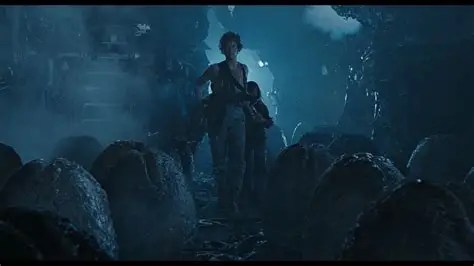
Some eggs I* found earlier. (*Ripley. Believe it Or Not!)
DAY FOUR: The Rolling Stoned
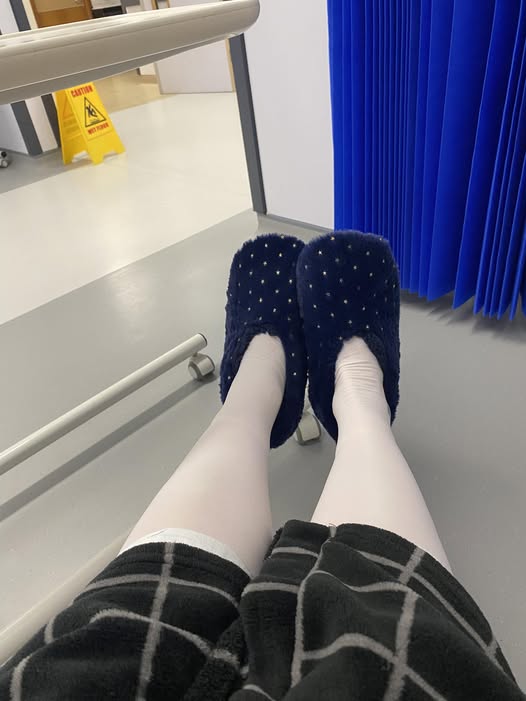
Still an egg. Still weebly: I wobble but I don’t fall down. Can’t see me own bits for the life of me—not that I would want to, y’understand? I had feet, once, too, I believe. Okay, okay, I’m exaggerating. The balloon has burst a little. I can zip my jeans up a millimetre more than I could yesterday, and that’s a win. (As if I’m wearing any kind of outdoor clobber. You KNOW I’m sitting here on my fat arse in plush pyjamas.)
Mr Aitch has popped out for baking supplies because I just CAN. NOT. COPE if I go a few days without creating something beautiful (or horrific). On the menu today: Mac and Cheese (one vegetarian, one vegan), and perhaps a batchacookies. Won’t be me eating ’em, mind; no appetite to speak of unless we’re talkin’ bagged potato slices. The salty ones. I want the crisps and need the crisps and will eat ALL the crisps, gosh darn it.
Stories are happening, too. I’m helping a friend with a book; delving into the corridors of a spooky mansion helps me take myself out of the ol’ self-indulgent whining for a bit. My own stuff is ticking along nicely, too, even if I manage to write only half a paragraph a day (this blog excepted). Progress is progress!
Feeling a little Rear Windowy, though. Being out of action as I am, all I can do is sit ‘ere and observe from the shadows… Muah-ha-ha… can you feel my eyes on you? Can you sense my collection of Liverpool horror stories creeping up behind you? I bet you can’t. I’m notoriously stealthy, despite my current girth.
Might roll myself off the sofa in a sec to grab a brew. No tablets today—must prepare for the great de-fogging of 2026. I’d rather have a touch of pain than not be able to brain, yanno? And braining being what it is, I might stick with the horror, might tackle the feature-length, or venture down the poetry route. Who knows? The words are there for the taking, and take them I shall.
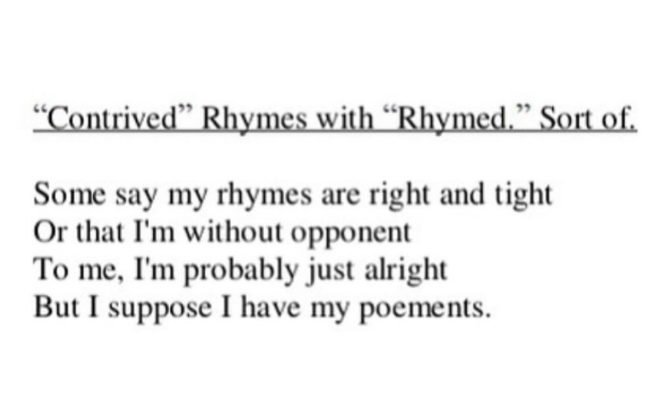
One I made earlier. Like me, it’s blurred.
DAY WHATEVER: Contractual Obligations
It’s the day after the last update, I know that much. I also know I’m pissed off: yesterday was THE WORST. But on the plus side, I’ve been inundated (in the best way) with emails and messages from friends and cohorts. So many folk have reached out; either to wish me well, to thank me for sharing, or to swap stories—gal pals who are still recovering from a hysteroscopy seven, ten days later; fellas whose other halves started out with the ‘scope and ended up having The Lot Out. And it all helps.
My headvoice has been going, “See? It’s not just you,” on repeat, to save me from all the gosh-darned infernal moping while I’ve been contractin’ in the bathroom, apparently trying to pass a giant land animal. Mid-mantra, though, Mum’s been hovering outside the bathroom in a panic, worrying the kids: “She’s crying. She needs to go to A&E.” – Tell me you’ve never had stomach/gynae issues without telling me… One does not simply stew in agony for hours in a fit-to-burstin’ waiting room while experiencing the Baby Elephant Cramps (Mancini missed an opportunity with that one, fo’ sho’). No: one simply sobs, wails the Banshee Blues, then collapses into bed with a fluffy water bottle (full nearly to t’brim with the contents of a kettle and topped up with hot tears).
I’m not embellishing this, either. It really IS like frickin’ labour. It comes in waves… but these contractions, burning my insides out, making a Lin Brûlée of me, come whenever the friggever they like. There’s no timing them, there’s neither rhyme nor reason. And there’s no beautiful baby at the end of it. I wish there was something, though. Something to explain it all; to make it all make sense.
I’ve got myself into the habit of venting on here, though. It’s helping me stay sane. It’s also going to serve as a diary of sorts, even if I am putting the pissed into epistolary. I don’t even care if anyone else reads it—it’s a Dear Lin letter to myself, not least because I have a head like a colander (bigger holes than a sieve). Mind you, I’m pretty sure I won’t be forgetting any of this. It’s being burned into my memory as we speak (or, yanno, type).
Burny.
DAY 10: LOSING THE WILL TO WHINE
I *think* it’s day ten. Haven’t blogged for a few days – proof of illness: If I ain’t writin’, I ain’t copin’. And I haven’t been. Quite a lot has happened since the last update, including a visit to the GP (“How come you’re here so soon? It’s only been a week, you can be expected to suffer for a couple more weeks, yet.”)
She couldn’t tell me much, as we were still waiting on the biopsy results, but she referred me for a blood test to check if I’m still fertile (i.e. Why the HECK am I Still Bleeding at My Age?). I asked about a hysterectomy, as I’m pretty much dead-set on that, now. It’s what they suggested ten years ago, should the ablation end up failing (which it apparently has). But this is something I’ll have to speak to gynae about.
Had the results call yesterday (Wednesday): negative for the Big C (woo-hoo!) but positive for Polyps (yah boo sucks). They snipped off at least one of the little dickheads in the biposy but can’t confirm if there are any others. I’m waiting for another call with another update… the polyps might have been the cause of the bleeding, but it might be a menstruation-thang—in which case, I am absolutely screwed. Periods and I do not get along, hence my having had the ablation surgery in the first place.
So, I’m signed off work until the 19th of January, but I’m really hoping to be firing on all cylinders long before then—I just want my routine back, yanno? I actually wanna be well!
Yesterday, though, was a bastard of an utter bollock. A big, hairy, sweaty bastard bollock. The worst day so far, by a LONG shot. My body completely failed me; I ended up being rendered completely immobile in the kitchen at 10pm, utterly frozen in place with the pain. Couldn’t move a muscle. And in front of the kids, to boot.
I don’t like hiding things from them, never have. I’ve always advocated being in touch with one’s emotions, and I’m not afraid to cry. Good job, really, or I’d have years and years of backed-up tears. But these kids—oh, man. The little one wanted to stay off school today just to look after his mama. What an angel. I might be in a terrible place right now, but at least while I’m here, I’m surrounded by the BEST people.
Da boi.
DAY 16 (?) FROM TIPPING POINT TO TURNING POINT
It’s been hard to bat away the Black Dog, gotta be honest. I always get like this when I’m poorly. Am I really that sick? There are people far worse off…and then I try to do something simple like take a ten-minute walk or pick something up from the floor and realise damn, yeah; I am reallythat sick.
I’ve been relying on a stick (sorry, Ma; I nicked one of yours while you weren’t using it), which has really helped. It redistributes the weight (of which there is way too much) so I can take some of the pressure off my mid-section. I’m not arsed about how I look, or looking ‘old before my time’ or any of that BS. But that’s not to say I haven’t been beating myself up. It’s open to me to work from home, but I can’t even do that at the moment— taking phone calls from customers is a no-go until I’m better, what with having to get to the bathroom six or seven times a day at a moment’s notice. Imagine how that would go down: “Yes, Mrs. So-and-so, I’ll sort that for you now… ARRRRRGHGHGH! Gotta go and have some contractions!” (Let alone trying to get my head around complex legislation and making good decisions.)
Speaking of phone calls, though, I had THE CALL today. After a quick hobble to the GP surgery to have my bloods taken, I had a call from Gynae. They explained that the hysteroscopy had been ‘a difficult one’ as the womb is pretty much sealed shut from wall-to-wall, and it’s possible that ‘there may be a small piece of tissue stuck in there, which might account for the protracted pain.’ Ah. Not great, but at least it might explain why I’m taking longer to recover than anticipated.
But then…
“We think you’re right. You’re gonna need a hysterectomy.”
WAIT… WHAT? Someone has finally listened to me? And they AGREE? I’ve asked for a procedure and they’re actually on board with it? Knock me down with a feather.
“You’re at risk for prolapse of the womb, and for endometrial cancer.” (This, despite my having been taken off the Cancer Pathway.) “We’ll whip it all out.”
“What about the ovaries?”
“There’s a slightly increased risk of dementia in those who have had their ovaries removed, but I’m not convinced by the studies, to be honest. There’s no evidence that suggests removal is a cause.”
“Nope. Probably a correlation, right?” (RIGHT?)
“Yes. And the benefits you’ll see will outweigh those risks. And then you’ll be eliminating a whole bunch of stuff that could’ve been causing this pain.”
And that’s the point. That’s precisely the point. I’ve been convinced for decades that my IBS and gynae pain are linked – and they agreed. “There’s definitely a link. And because you’re at risk from [several different cancers], it makes sense to remove what we can now.”
IT MAKES SENSE.
It’s a load off. A massive load. It’s validation, yanno? I didn’t want to get to the Spike Milligan stage and have to spook people from beyond the grave with spectral I-told-you-sos.
I’ve heard some rather ‘interesting’ comments about CG this week, for standin’ up and shoutin’ out. Who does he think he is? He’s virtue signalling, he’s making it about him, he’s playing White *Saviour… *yawn, yawn, fuckin’ yawn*
It’s Golden’s response to the latest rant from the extraordinary (and not in a good way) Tom Monteleone. I’m not going to include a link to TM’s hateful horseshit here, as his own particular brand of blogwank doesn’t deserve any more traffic. And yeah, I use ‘hateful’ on purpose. It’s that quiet, posh, all-singing, all-dancing racism that’s been swept under many a rug for decades. Monteleone has (or had) a black friend, don’t ya know? (Linda Addison is “a very nice, congenial and smart lady I always considered a friend…”) And for that, read: I’d better state how lovely she is, right before I say something racist and douchebaggy, just so I can’t be called a racist douchebag.
That’s racism 101, pal. Black friend, and lovely-person disclaimer. Quiet racism, almost to the point of silence. But here’s the thing: the quieter the racism, the louder we must shout.
Suffice t’say, ol’ Tom has it covered. All of it. Sussed. Not content with being your common-or-garden bigot, he’s really gone to town this time, covering all bases. Rampant misogyny? Check. Homophobia? Check. White Privilege? Check. I think he must be after a frickin’ medal or something, for Most Boxes Ticked in a Single Sesh. Not that he would be in with a chance of winning, though, what with fragile white dudes being, like, so oppressed ‘n’ shit. (Poor loves.)
This is something he makes sure to point out, by the way, in case you were in any doubt. Only two—TWO—straight, white guys were nominated for whatever the fuckever’s got on his tits this time:
‘I think the recent history of the LAA speaks for itself—a definite DEI agenda, which got me excoriated for merely pointing it out in an aside in my nominating letter. Indeed the push lately to nominate three winners in a given year seems to be an obvious effort to balance the scales even a little bit. I know I don’t need to state the obvious, but I will: for the last six years, Straight, White Guys: two; Women: eight; “Writer of Color”: five. I rest my case.’ (Spoiler alert: does hebollocks rest his case.)
He doubles down, too: according to him, Linda isn’t a writer of horror poetry, but a writer of “horror poetry.” Ah, those scathing quote marks that say so much. About him.
‘Her body of work is mostly poems and a handful of collections, but hardly what any student of the field would deem a lifetime of work that “significantly influenced and contributed to the field.” To me (and lots of others who kept their mouths shut, the selection was somewhat of a surprise)—especially after many mentions of the Addison award prefaced it with the proclamation that she was the first black recipient of the award (as if skin color should be a reason for accomplishment to be recognized).’
Tom, U ok, hun? [insert worry-face emoji here]
(But enough about him. There’s plenty of online commentary out there, should you care to go down that hole of rabbits.)
So what, by contrast, do we have in Christopher Golden? An author, supporting other authors. Shocking!
Supporting friends. HOW DARE!
Supporting the oppressed, the underrepresented, the marginalised. What a terrible person. Sheesh.
‘Linda Addison does not need you to acknowledge her worth to be worthy. She doesn’t need to have been embraced by readers who are not interested in poetry for her contributions to be significant. You don’t need to have felt her influence or even observed it for her to be influential.’ – Christopher Golden.
Standing up for People of Colour does not make you a white saviour. It makes you human. It makes you a decent person. It’s the right thing to do. And I’m kind of at a loss as to why more people aren’t doing it. Allies are precious. Being that it’s usually we white folks doin’ the perpetratin’, isn’t it up to us to call out the bullshit everywhere we smell it?
So, yeah. To those of you nodding along with Christopher Golden, and to the man himself: thank you.
Jake Thackray—what is a songwriter if not a poet?—is one of the finest wordsmiths ever to grace both page and stage; and, indeed, one of the finest horror writers, though he might not be commonly acknowledged as such. With an unbridled passion for words (and all the hoops through which he could get them to jump), Jake would weave entire worlds from the threads of language, producing the silken, impenetrable fabric of verse. Via the odd—in every sense—little ditty, assisted in no small part by the relentlessness of the slant rhymes that one imagines came to him as naturally as breathing, he could convey an atmosphere of dread, of doom, of death, all of which are rife in Old Molly Metcalfe, published in Jake’s Progress, Star Publishing, 1977.
When performing the piece, Thackray would introduce the tale thus: “In Swaledale, North Riding of Yorkshire, sheep farmers used to—and some of them still do—count their sheep in a curious fashion: Yan, tan, tether-mether-pip…” and explains that Molly Metcalfe was a shepherdess on a moor, sent to mind sheep at the age of eight. “She was found rotting with her ghastly sheep at about the age of twenty-eight. This is a song for her.”
The repetition of “Yan, tan, tether…” (is the girl really counting sheep, or is she counting down to her own demise?) conveys methodically the cold, cold atmosphere of both the Yorkshire moors and the dreary situation. But for me, it’s the beautiful, delicious assonance that hammers home the horror of the tale, particularly “…steepand bleak,” and “In herback in the bracken…” These two fleeting phrases top-and-tail the narrative, summarising the history of Molly’s short life rather nicely. Or, to be more accurate, rather horrifically.
I’d have the worst schoolday ever But I’d come home —and it wasn’t as now, where I will cry into a poem, but then, back then, I’d tell it to Ella. I’d be eternally battered and beaten, my fists filled with fight, bullied blood frightened out of me, a parent who shouted and screamed and paternally doubted me and drew words from the air whenever he could—and he’d cast them and throw them as he yanked out my hair—there’d be tears; there’d be blood— Then I’d tell it to Ella.
And she’d listen, y’know? No matter which way I’d go, how far I’d take it, and to where— She’d sing coz she cared. For her voice became ears And endowed me with crowns and sceptres and swords And I collected my thoughts So that I might face fear with rhyme and rhythm And allow my own words a reason for living.
This is how it’s been since. Since that first day I pressed play When everything changed: When my thoughts rearranged, ceaselessly. Self-hatred is overrated, after all, no matter how hard I fall. And I did—I fell. Frequently. But Ella was always there to tell.
Through listening, she saw it all. But no—it’s more: She still does. We make a right pair, the two of us. One on a tape, on a disc, or a chip The other a chick with a history, brief, quick It’s a lie that she died—an existence persisting via song can’t be wrong.
She proves it to me All the time, every day Especially during those moments When I have to press play.
Bobby’s going to take some convincing, being far from the sharpest knife in the drawer ’n’ all. Hell—he’s not even in the drawer (neither is the knife, but we’ll get to that). ‘But… all them prezzies we got last year—how would Dad have managed that on his own?’
‘Duh. Mum helps. And it’s “Those prezzies.”’
‘I posit that you included an explanatory-yet-altogether-humourless faux-correction lest the reader considers my clumsy vernacular a reflection upon the self-indulgent author’s grasp of grammar.’ Bobby’s only six, but talks like a fifty-year-old woman. Funny, that. ‘And if it is him, why does he dress up? We’re not supposed to see him.’
‘Maybe coz if he catches us watching, he can just go “Ho-ho-ho!” or whatever. Didn’t ya notice the cushions missing off the sofa? They’re under his costume.’ (Why is the dude always on the porky side? Why not have Slender-Claus for a change? –Ed.)
There’s rustling, next. And crinkling: the paper-wrapped packages are being de-sacked and placed by the fire. Even though they don’t have a fire. And if they did, it wouldn’t be advisable to put the presents anywhere near it, what with it being a BIG BURNY DEATHFLAME HAZARD ’n’ shit. Under the tree would make more sense. Doombrain. (Me, not you. Although…*)
*Depends who’s reading.
Twigging on to the shuffling boy-feet upstairs, Dad plonks the presents by the fire under the tree, shushes himself like a gilded pisshead, and scurries behind the living room door.
‘That’s it!’ says Fred, who’s just this minute shortened his name. ‘What’s it?’ asks Bob, in italics.
‘I’m going downstairs for proof. Stay hidden, but open our door a crack, watch from under the blankets.’
‘What if he gets past you and heads up here? It’s dark! I won’t be able to see!’
‘You’ll at least see a flash of red, even from bed,’ says Fred, coz I do like a triumvirate of shitty rhymes. ‘In which case, pretend to be asleep. Just keep your eyes peeled.’
Fred takes the stairs three-at-a-time owing to his rather lengthy legs, which I probably should have mentioned earlier, but there’s no sign of Dad, so he heads back up.
A scream comes next, followed by some unintelligible babbling, which I cannot even begin to spell. Bob’s at the bedroom door, bloodied and eyelidless, along with a telegraphed ending. The peelings are on the floor—somewhere. It’s impossible to make them out amongst all the gooey, fleshy splats coating the discarded blade.
Next comes the Santa Dash as Dad legs it upstairs. Mum’s already on the scene, because she does love a good Police Squad! reference.
Bob whimpers. ‘Y-you told me to k-keep my eyes p-peeled. But it’s okay, bruh. I believe you, now. I saw the red.’
‘It’s a good job I didn’t tell him to keep his ear to the ground!’ says Fred, with a giggle.
‘LOL,’ says Mum, who speaks in lazy, contrived initialisms.





 Libera te Tutemet